Zadar inventories and clothing made “in the Croatian manner”
In the history of the tie, some of the most valuable traces are those that do not refer only to the finished garment, but to the broader cultural space in which names, styles and forms of dress were shaped. One such trace appears in Zadar inventories and wills from the late sixteenth and seventeenth centuries, where the terms crovata, croata and krovata occur.
The historian Ivna Anzulović examined this term in her 1992 article “Što je ‘crovata’ iz inventara i ostavština kod zadarskih bilježnika iz kraja 16. i iz 17. stoljeća”, published in Radovi Zavoda za povijesne znanosti HAZU u Zadru. Her research is important because it points out that a word related to the later term kravata did not designate the modern tie in the Zadar archival material, but a specific item of clothing.
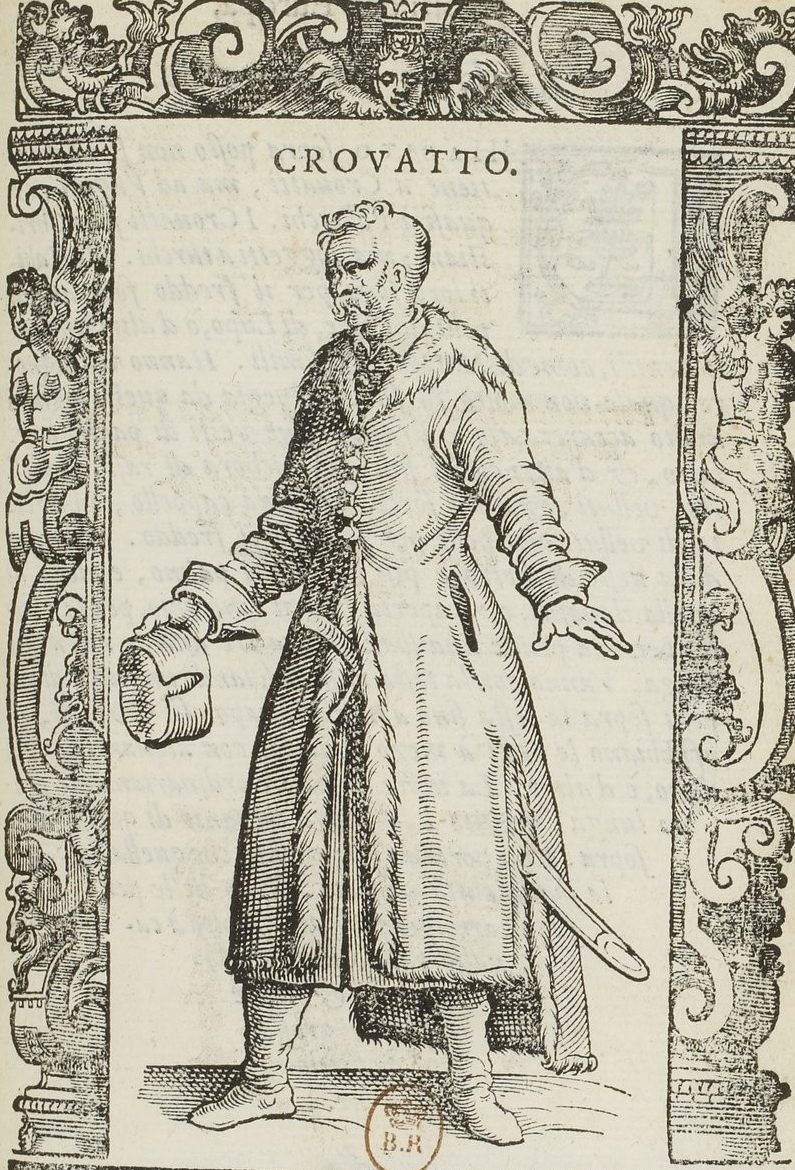
According to Anzulović, the crovata was an upper garment in the form of a jacket, most often lined with fox fur, made of different fabrics and in different colours. This opens a broader question: how, in areas of cultural contact, garments often received names derived from peoples, regions or styles with which they were associated.
The Earliest Zadar Records
The earliest known record that Anzulović connects with the term krovata dates from 1600, in the estate of Šimun Locatelli, son of Antonio, a gunner. The will mentions his “favourite krovata”. This record alone does not reveal what the item looked like or precisely which part of clothing it was.
Later inventories and wills provide more information. In them, crovata appears as an item made of various fabrics, often lined with fur. The documents mention, for example, krovate lined with fox fur and made of cloth, velvet, damask or other textiles. Some examples were red, green, blue, ash-grey or rust-coloured.
These records indicate that the crovata was not a simple item of everyday clothing. It was recognisable by its material, lining and probably by a particular cut.
An Upper Garment, Not the Modern Tie
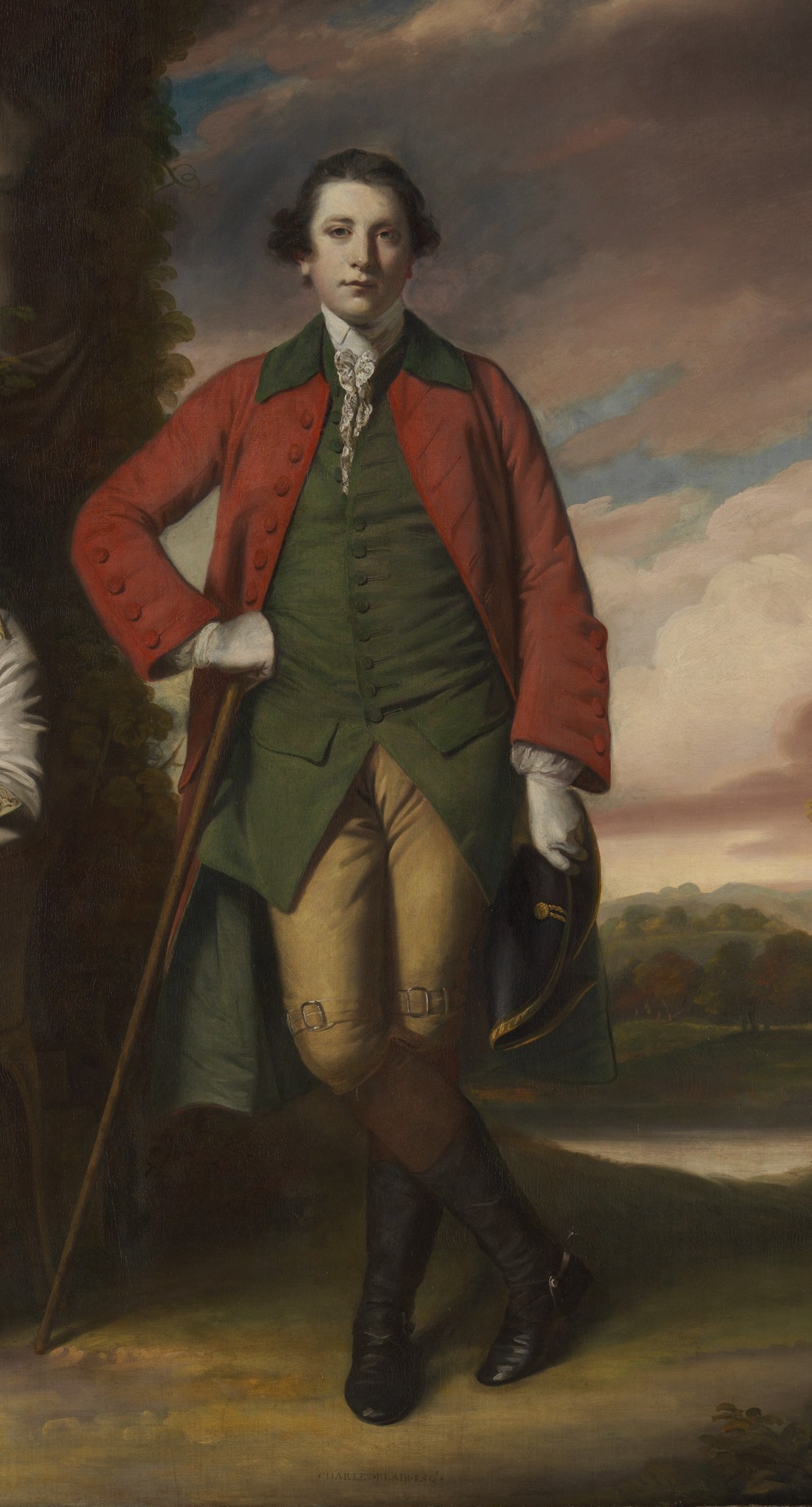
To understand this term, it is important to avoid anachronism. The crovata found in the Zadar inventories was not a tie in the modern sense. It was not a narrow strip of fabric tied around the neck, but an upper garment, probably resembling a jacket or a type of robe, made of quality fabric and often lined with fur.
Anzulović emphasises that other upper garments could also be lined with fur, yet they were not called crovata. This means that the lining itself is not enough to identify the item. Its cut, or a particular appearance that distinguished it from similar garments, was also important.
One record shows that krovate could be made with or without sleeves. One sleeved example mentions gilded buttons, which may suggest detachable sleeves, a feature known in Renaissance clothing. However, Anzulović carefully notes that the available data are too limited to fully reconstruct the garment’s cut.
“Alla crouata”: Made in the Croatian Manner
A particularly important record dates from 1570, from the inventory of Sladoje Milanović, captain of the Croatian cavalry in Zadar. It mentions una vesta di panno rosso fodrato di uolpe alla crouata — a red upper garment or robe made of cloth, lined with fox fur, and made alla crouata.
Anzulović suggests that this expression may represent a transitional stage toward the emergence of the name crovata. In this case, alla crouata does not necessarily designate the item itself, but a manner of making or a style: “in the Croatian manner”.
The same inventory mentions other objects made in the Croatian manner: a silk belt, shields, lances, horse saddles, collars, a breastpiece decorated with pearls, and headcloths embroidered with gold. Such records indicate that within the Zadar and Venetian administrative context, a specific “Croatian manner” of equipment, dress or decoration could be recognised.
This is significant because it is not only a matter of one word, but of a cultural pattern: what differed from the usual clothing of a neighbouring space could be named after the people or style with which it was associated.
Who Owned a Crovata?
According to Anzulović’s data, krovate were owned by people from different, but mostly higher, social strata. They included members of Zadar noble families, captains, stratioti, chancellors and their heirs.
One inventory also mentions a krovata for a boy. This suggests that the garment was not limited to adult male dress, but could also belong to children’s clothing among higher social groups. In the same context, Anzulović notes that children at the time could be dressed like adults, as confirmed by other visual and archival evidence.
The crovata was therefore part of a clothing culture associated with status, material and a recognisable manner of making.
A Word from a Space of Cultural Contact
The Zadar examples are especially interesting because they come from a space where different political, linguistic and clothing traditions met for centuries: Croatian, Venetian, Dalmatian, Ottoman and Central European. In such spaces, garments often received names derived from regions, peoples or groups with which they were associated.
In her conclusion, Anzulović recalls comparable examples such as the dalmatica, the liburna, the sclavina and other names derived from a place or people. In this sequence, the krovata appears not as the modern tie, but as a historical name for an upper garment of a particular make and recognisable appearance.
This interpretation is also important for the broader history of the tie. It shows that a word associated with the Croatian name existed in several clothing-related meanings before the French and other European languages established it as the name for a neckcloth, and later for the tie.
Conclusion
Ivna Anzulović’s work shows that the term crovata in Zadar inventories and wills from the late sixteenth and seventeenth centuries referred to an upper garment, most often in the form of a jacket, lined with fur and made of various fabrics. This item should not be identified with the modern tie, but it should be considered an important part of the broader history of clothing names connected with the Croatian name.
The most important trace is not only the word crovata, but also the expression alla crouata — “in the Croatian manner”. It shows that Zadar archival material could recognise a particular tradition of dress and equipment associated with Croatian style or Croatian workmanship.
For this reason, the crovata is not merely an interesting linguistic occurrence. It is an archival trace of cultural contact, social status, textile history and the way garments in the past were named according to recognisable differences between peoples and regions.
Sources and Literature
- Ivna Anzulović, “Što je ‘crovata’ iz inventara i ostavština kod zadarskih bilježnika iz kraja 16. i iz 17. stoljeća”, Radovi Zavoda za povijesne znanosti HAZU u Zadru, vol. 34, Zadar, 1992, pp. 99–107.
- Vladimir Huzjan, “Pokušaj otkrivanja nastanka i razvoja kravate kao riječi i odjevnoga predmeta”, Povijesni prilozi, 34, Zagreb, 2008, pp. 103–121.
- Nicolo Tommaseo – Bernardo Bellini, Dizionario della lingua italiana, entries corvata, croata, crovata.