Colours and patterns on a tie have not always been matters of taste alone. In British tradition they could reveal a regiment, school, college or club. The tie thus became one of the most discreet signs of shared identity.
At first glance, a striped tie is a simple geometric pattern: a few colours, a sequence of regular diagonals and a rhythm repeated along the silk.
But there are ties in which a stripe is not merely a stripe.
A particular arrangement of colours can denote a military regiment, a school, a university college, a club or another association. To someone who does not know the code, the tie remains a beautiful object. To someone who does, it says something specific about the person wearing it.
That distinction reveals one of the tie’s most interesting qualities: it can express the individual while at the same time connecting that individual to a community.
When Colours Become a Sign
British tradition developed an entire culture of ties whose colours, stripes, crests and small repeating devices express affiliation. Regimental ties are associated with military units, school and college ties with educational institutions, and club ties with clubs, societies and other communities.
Their original meaning was not that anyone should simply choose the pattern they liked best. The pattern followed from belonging.
That is why, in the British context, there was a clear distinction between a tie that merely resembled a regimental or club design and one that represented a real institution. Historical writings on neckwear describe club and college ties precisely as signs of recognition: the same pattern could create an immediate connection between people who had never met but shared a school, club or experience.
Such a tie did not need to introduce a man to everyone. It was enough for it to be recognised by someone who knew what its colours meant. A discreet sign became a conversation before the conversation.
A Tie Chosen for More Than Taste
From this comes a particular convention of the tradition: not every tie one can obtain is necessarily a tie one ought to wear.
When a specific arrangement of colours or emblems represents a real military unit, school or club, wearing it traditionally implied some connection with that institution. In such a case, an attractive pattern is not entirely neutral. It makes a claim.
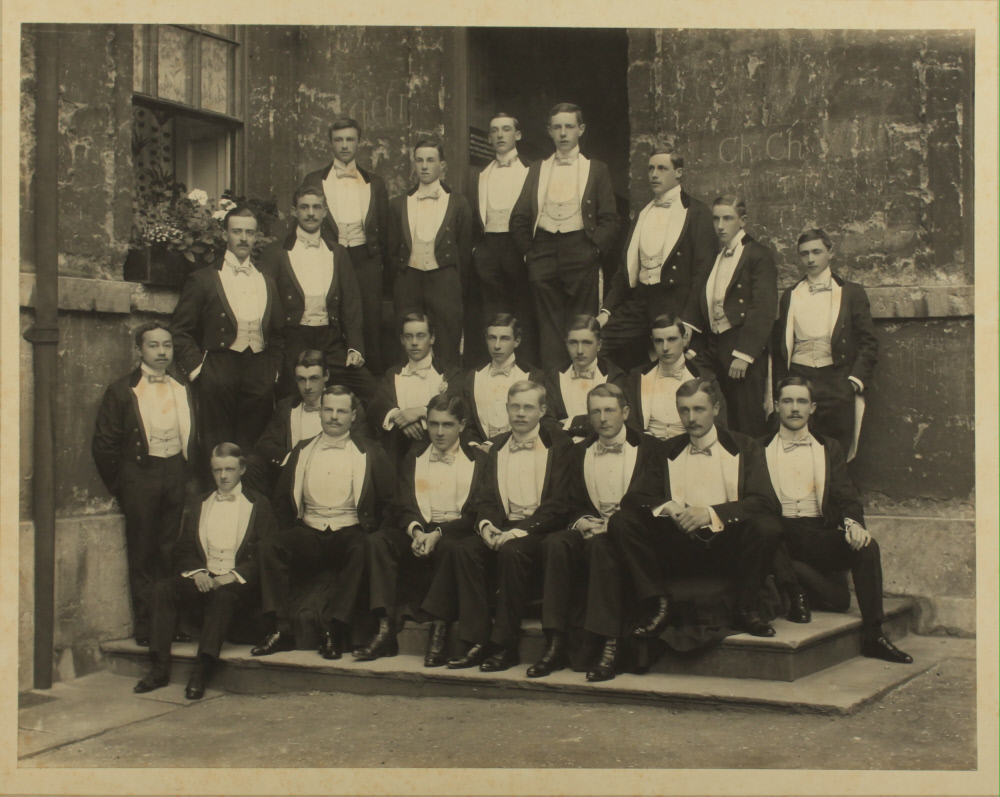
This is less a rule of dress than a rule of meaning. The distinction resembles the difference between a decorative symbol and an insignia that has been earned. Its value lies not only in the silk, colours or design, but in the story behind them.
For that reason, such ties could be objects of pride and, at the same time, of discretion. They did not need to be loud in order to be legible.
From Belonging to Style
During the twentieth century, an interesting reversal took place. The visual language of regimental stripes moved beyond its original British context and became part of a much broader vocabulary of classic menswear.
Brooks Brothers marks 1902 as the year in which its American repp tie reversed the direction of traditional British diagonal stripes. The same visual principle could therefore be separated from the meaning of a specific British regiment and become a style available to a much wider public.
Something happened that recurs throughout the history of the tie: a sign became a style.
A stripe that in one world could indicate membership of a particular group became, in another, a widely accepted element of elegant menswear. Today there are thousands of striped ties that visually recall regimental designs without representing any actual regiment.
The difference between them is not necessarily visible in the form itself. It lies in the meaning.
Individuality and Belonging
We often speak of dress as a means of expressing individuality. We choose something because it says something about us, distinguishes us or corresponds to our taste.
Club, college and regimental ties reveal the other side of the same story. Sometimes a person dresses in order to say: I am not the only one.
The same tie worn by several people does not erase their identities. It establishes a relationship among them. Colours become a shared memory of a school, regiment, club, profession or experience.
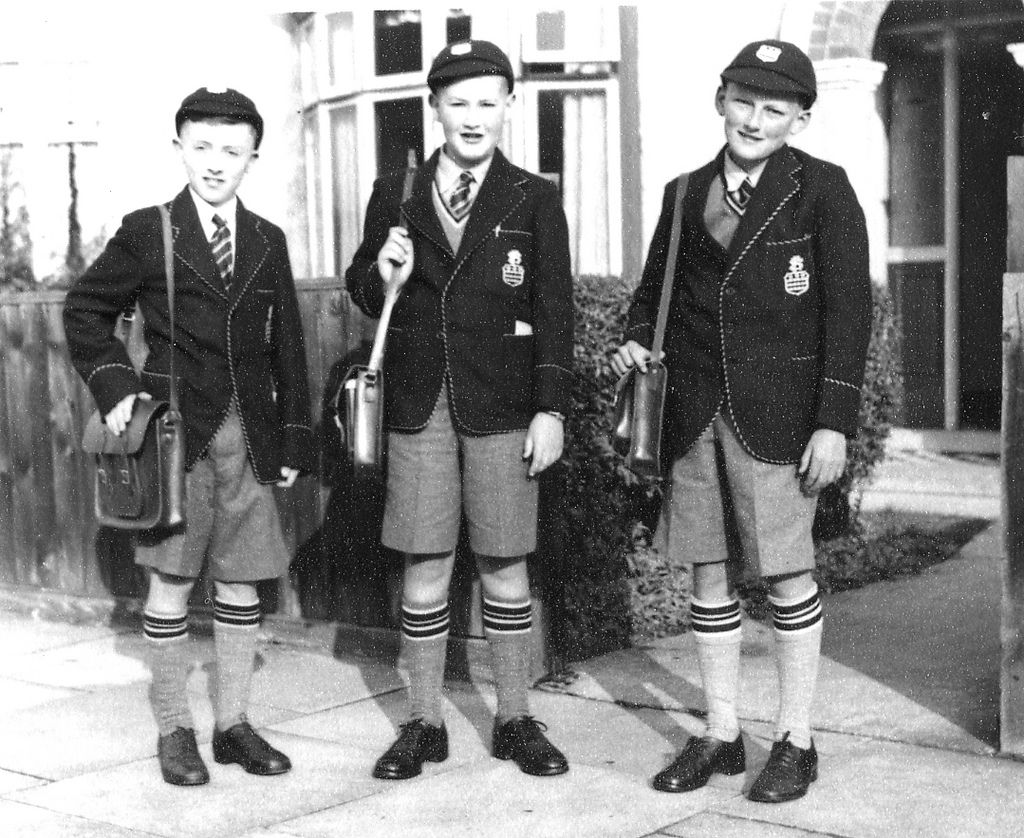
In that context, the tie can do something few garments can do so discreetly: remain a personal object while also becoming a shared sign.
Those who do not know see a pattern. Those who do know recognise belonging.
The Right to a Pattern
This is where the particular value of the tradition lies.
A pattern may be beautiful in itself. But when people, events and shared experience stand behind it, its beauty acquires another dimension.
The tie is no longer simply a surface on which a sign has been placed. It carries the sign.
Perhaps that is why the phrase the right to a pattern describes this kind of tie so well. It is not primarily about prohibition, but about the bond between a sign and its meaning.
Some patterns are chosen because we like them. Others are worn because they represent something.