At the beginning of the 19th century, Beau Brummell did not invent the cravat or a new system of menswear. His influence was different: he turned simplicity, impeccable tailoring and a precisely tied white cravat into a new measure of elegance.
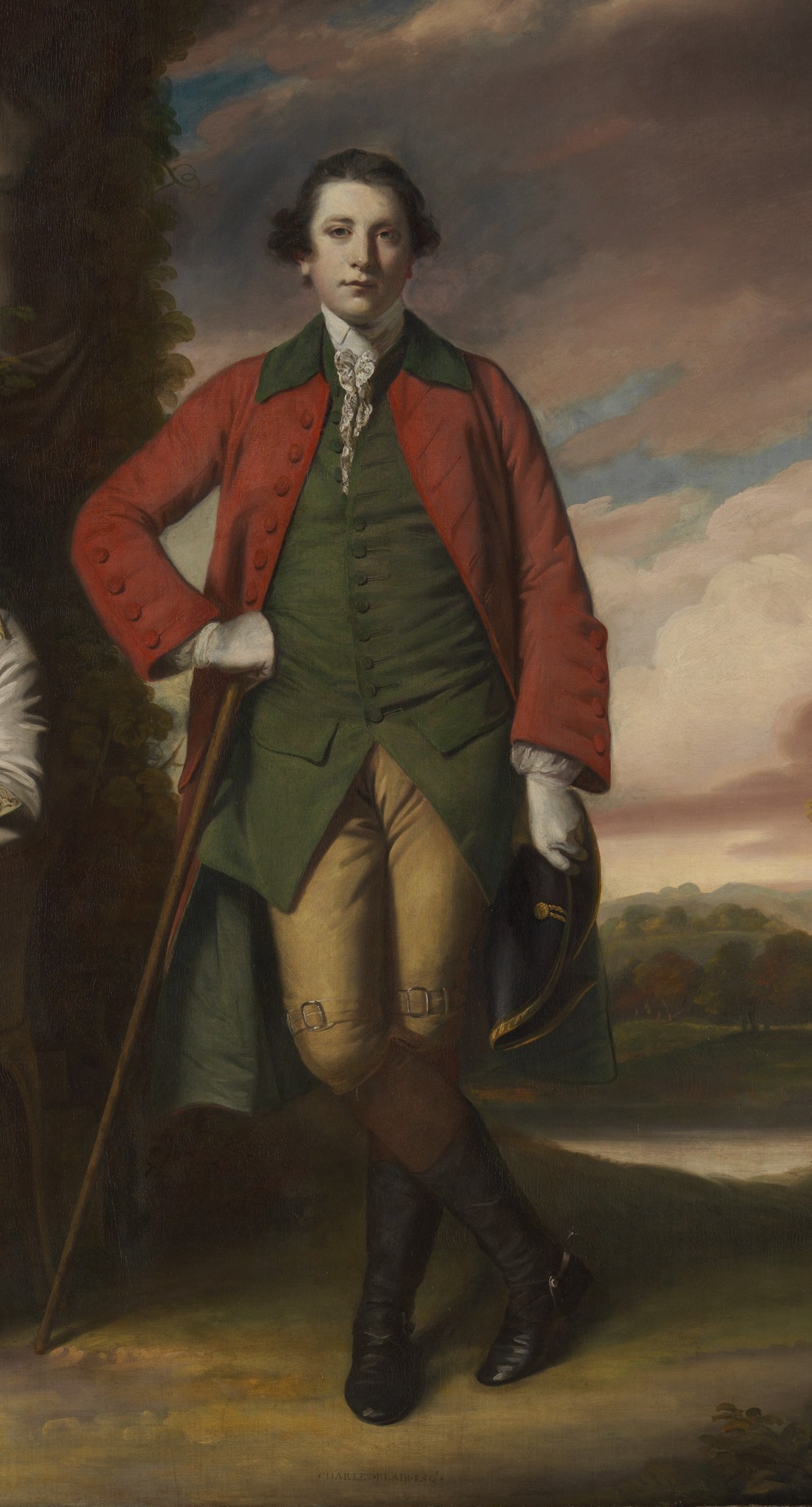
At the turn of the 18th and 19th centuries, menswear was changing.
The elaborate fabrics, lace and ornament of the previous century were gradually losing their central position. Silhouettes became cleaner, colours more restrained and cut more important.
It was in this moment that George Bryan Brummell, known as Beau Brummell, emerged. The National Portrait Gallery describes him simply as a “leader of fashion”. His influence did not rest on inventing unusual garments. Quite the opposite: he refined existing elements of male dress with extraordinary precision and turned them into a whole that others sought to imitate.
Less Ornament, More Measure
Brummell’s appearance was almost the opposite of the idea that elegance had to be displayed through abundance.
A dark coat, pale waistcoat and pantaloons, an immaculate white shirt, polished boots and a white cravat formed the basis of his dress. None of these elements was revolutionary by itself. Brummell’s distinction lay in measure: cut, cleanliness, proportion and the way everything worked together.
Within this restrained whole, the white cravat acquired a special place.
It did not need to attract attention through elaborate pattern or lace. It had to be clean, correctly shaped and precisely tied.
Value was no longer located only in the material on display, but in the measure with which everything had been put in its proper place.

The Cravat as Discipline
Brummell’s attention to the cravat became legendary in the earliest accounts of his life.
William Jesse’s biography, published in 1844, four years after Brummell’s death, records a description of his tying ritual. The high shirt collar was first folded into position, and the white neckcloth was then shaped into controlled folds. The same circle of early sources also preserves the famous anecdote of a valet carrying a pile of crumpled cravats from Brummell’s room. Asked what they were, he supposedly replied: “Our failures.”
The point of the anecdote is not to treat it as a stenographic record of an ordinary morning, but to recognise how perfectly it captures a new idea of the cravat: the knot was no longer an incidental final step in dressing.
It became the final test of the whole.
A Knot Without Ornament
Brummell’s white cravat was a large neckcloth of fine linen or muslin, worn with a very high shirt collar. Early 19th-century menswear placed exceptional emphasis on the neck: collars rose towards the jaw, while the cravat was carefully folded and shaped around them.
For Brummell, the aim was not to create the most complicated possible knot. What mattered was control of proportion.
The collar, the width of the cloth, the height of the cravat and the face had to work as one composition. Early descriptions of his dressing preserve an almost ritual procedure: head raised, cloth placed high around the neck, then brought into the desired folds as the chin was gradually lowered.
The cravat was no longer shaped by the hands alone. Posture itself participated in its form.
Elegance That Conceals Effort
This may be Brummell’s most enduring contribution.
A great deal of work was required to achieve a perfectly simple appearance. Yet that work was not supposed to show.
His style rested on restraint: exact tailoring, immaculate cleanliness and control of detail, but without demonstrative luxury. The result was meant to appear natural, almost effortless.
The principle extends far beyond the cravat itself.
From this point onward, one of the lasting ideas of male elegance would be the relationship between discipline and ease. A cut should be precise without appearing stiff. A cravat should be considered without looking like a display of skill. Clothing should be ordered, while the result remains calm.

From Ornament to Character
In the 18th century we encountered the lace cravate, the Steinkirk and the stock – different ways in which cloth and construction could shape the space around the neck.
With Brummell, another shift takes place.
The form is purified.
The white cravat no longer needs elaborate ornament because its value lies in proportion, cleanliness and the manner in which it is tied. The cravat thus becomes more than a decorative element: it becomes an expression of personal measure.
Brummell mattered not because everyone after him wore the same knot, but because he demonstrated how little needs to be visible in order to say a great deal.
A New Measure
The cravat began its European journey as a distinctive piece of cloth worn around the neck. During the 17th and 18th centuries it acquired lace, volume, new methods of tying and more rigid constructions.
With Beau Brummell, it becomes simplified again.
But simplicity is no longer the absence of form. On the contrary, it becomes its most demanding expression.
White cloth, a precise knot and the right proportion were enough.
From this idea, the 19th century would develop an entire culture of tying the cravat. Manuals appeared, knots acquired names, and new rules emerged for the way neckcloths should be worn on different occasions.
The cravat was about to acquire something it had never possessed to quite the same degree:
a grammar of its own.