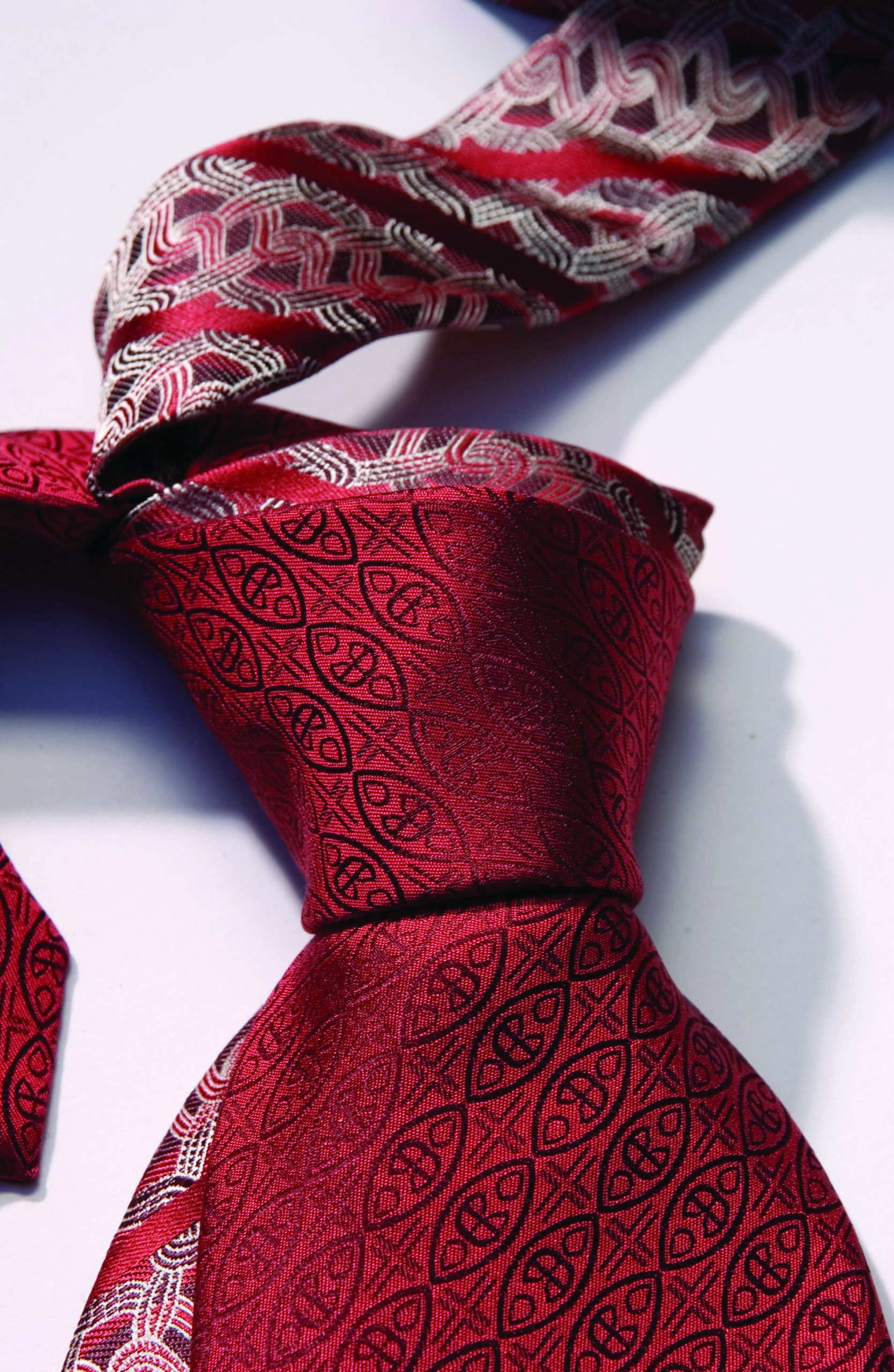
In 1999, two Cambridge physicists asked an unusual question: how many different knots can be made with a conventional necktie? Their model produced 85 possibilities. But the more interesting question was the next one – which of them are aesthetic?
A tie knot is made by hand, in front of a mirror, through a sequence of movements that most people, after enough repetition, perform almost without thinking.
Left. Right. Around the narrow end. Towards the centre. Through the loop.
Thomas Fink and Yong Mao, then researchers at the Cavendish Laboratory at the University of Cambridge, saw something else in these everyday movements.
They saw a mathematical problem.
In March 1999 they published Designing Tie Knots by Random Walks in Nature. Instead of starting with familiar knots and asking how to tie them, they reversed the question: if the rules governing the movement of a tie around the neck are known, can all knots generated within such a model be calculated?
Their answer was 85.
A tie on a mathematical lattice
Fink and Mao reduced the space beneath the collar to three positions: left, centre and right.
Each movement of the wide end could then be recorded according to where it travelled and whether it passed in front of or behind the rest of the knot. A tying sequence becomes a string of symbols, and the making of a knot becomes a path on a triangular lattice.
Within their model, the tie almost ceases to be a piece of silk. It becomes a trajectory.
The four-in-hand, the Windsor or a previously unnamed knot are no longer merely different tying methods. Each becomes a particular sequence of permitted moves.
Applying practical constraints appropriate to a conventional necktie and the way it can wind around the neck produced 85 possible knots within their model. In a fuller paper published in 2000, they classified these knots according to size, shape and mathematical structure.
Mathematics had created a catalogue of possibilities before all of them had to be named or absorbed into a tradition of dress.
But which knot is beautiful?
This is where the problem becomes much more interesting.
The fact that a knot can be tied does not mean that we would want to wear it.
Fink and Mao therefore added aesthetics to the mathematics. They classified knots by shape and described their aesthetic constraints through symmetry and balance.
Size and the number of moves influence whether a knot appears narrow or broad. Symmetry measures the relationship between left and right movements. Balance, in their model, concerns the distribution of changes in winding direction through the tying sequence – how the moves are arranged so that the knot remains tightly bound and keeps its shape.
In other words, they attempted to describe numerically part of what the eye often judges in an instant.
Is the knot too narrow? Too compact? Do the left and right sides feel coherent? Will the structure remain stable?
From the 85 possibilities, their expanded work identified 13 aesthetic knots: four traditional knots and nine new ones. Their mathematics therefore did more than describe known knots – it proposed new ones.
Symmetry is not the same as beauty
At first glance it might seem that the most beautiful knot should simply be the most mathematically symmetrical one.
This is precisely where the tie begins to resist the formula.
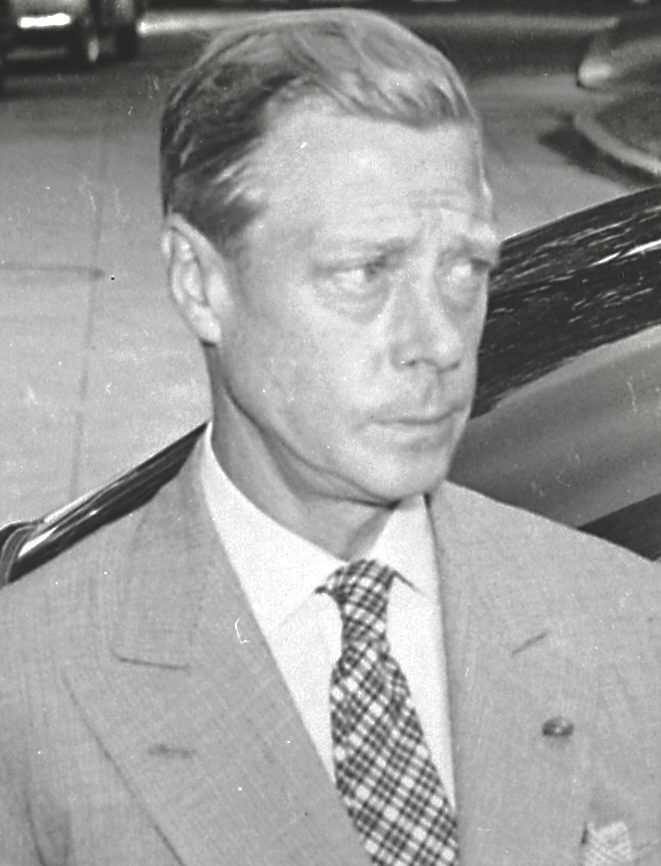
The four-in-hand remains one of the most enduring knots partly because it is not perfectly symmetrical. Its slight irregularity can look more natural than a geometrically perfect triangle.
Conversely, a large and highly symmetrical knot may be impeccably constructed yet entirely wrong for a slender tie, a small collar, or the proportions of a particular face and body.
Mathematical beauty belongs to the knot. Elegance belongs to the relationship.
A knot has to work with the width of the tie, the weight and character of the silk, its construction, the collar, the face, the bearing and the person wearing it.
A formula does not see all of that.
What mathematics nevertheless revealed
That does not mean Fink and Mao’s experiment missed the essence of elegance. Quite the opposite.
Their work showed that something we perform intuitively has an underlying structure.
They did not invent symmetry in a knot. They made it measurable. They did not invent balance. They showed how it could be recognised in a sequence of movements.
And they did not discover a formula for elegance.
They discovered boundaries within which elegance can arise.
That is a far more interesting result.
What remains to the eye and the hand
A tie can be described in numbers. We can measure its width and length, the weight of the silk, the number of moves required for a knot and the degree of its symmetry.
But the final judgement remains outside the equation.
When we look in the mirror, we do not ask for the balance coefficient of our knot.
We see whether it suits us.
Perhaps that is where calculable regularity ends and elegance begins.
Mathematics can explain why a knot is balanced. It cannot decide whether it has measure.
And measure, unlike symmetry, does not exist on its own.
It exists only between the tie and the person who wears it.