From a military term to a garment
The French word cravate occupies an important place in the study of the history of the word “tie”. Among European languages, the French form became one of the key intermediaries through which the name of the garment spread further. At the same time, French lexicographical sources show that in the seventeenth century the word cravate did not refer only to an item of dress, but also carried military and ethnic meanings.
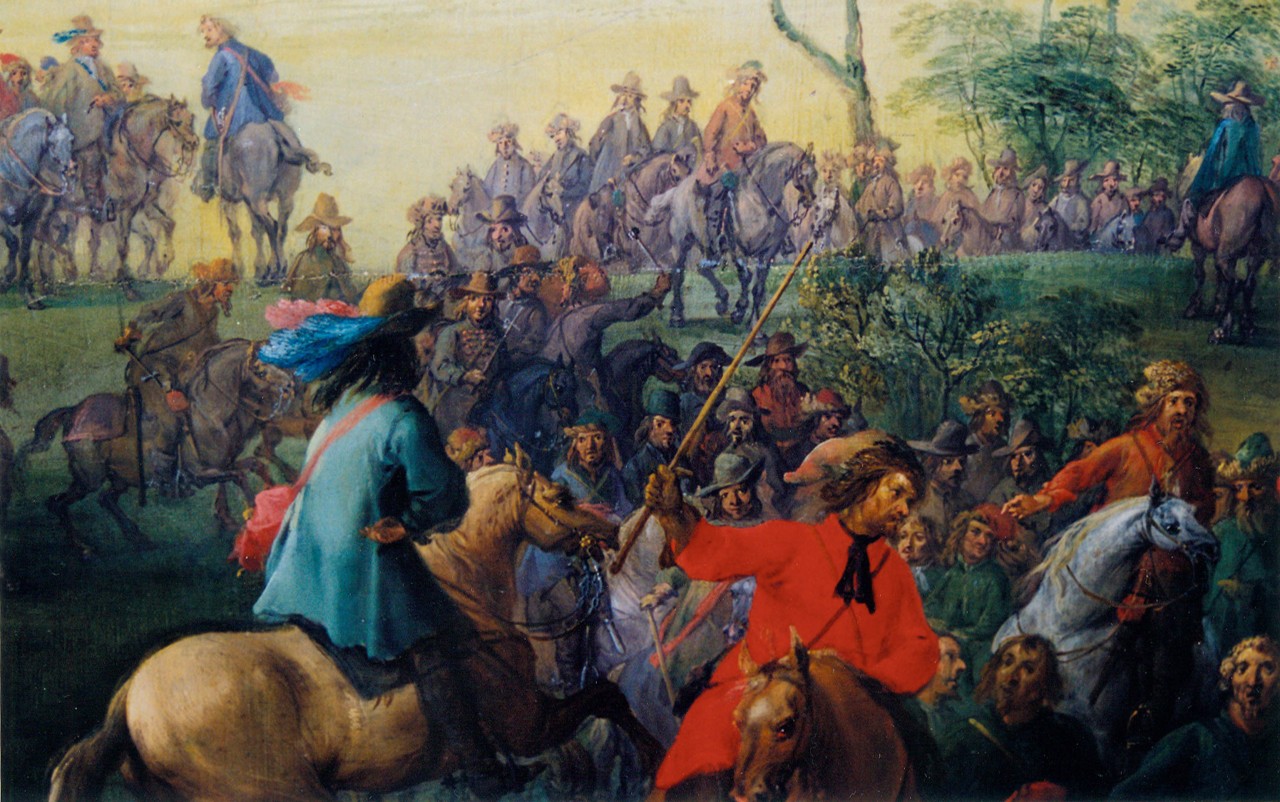
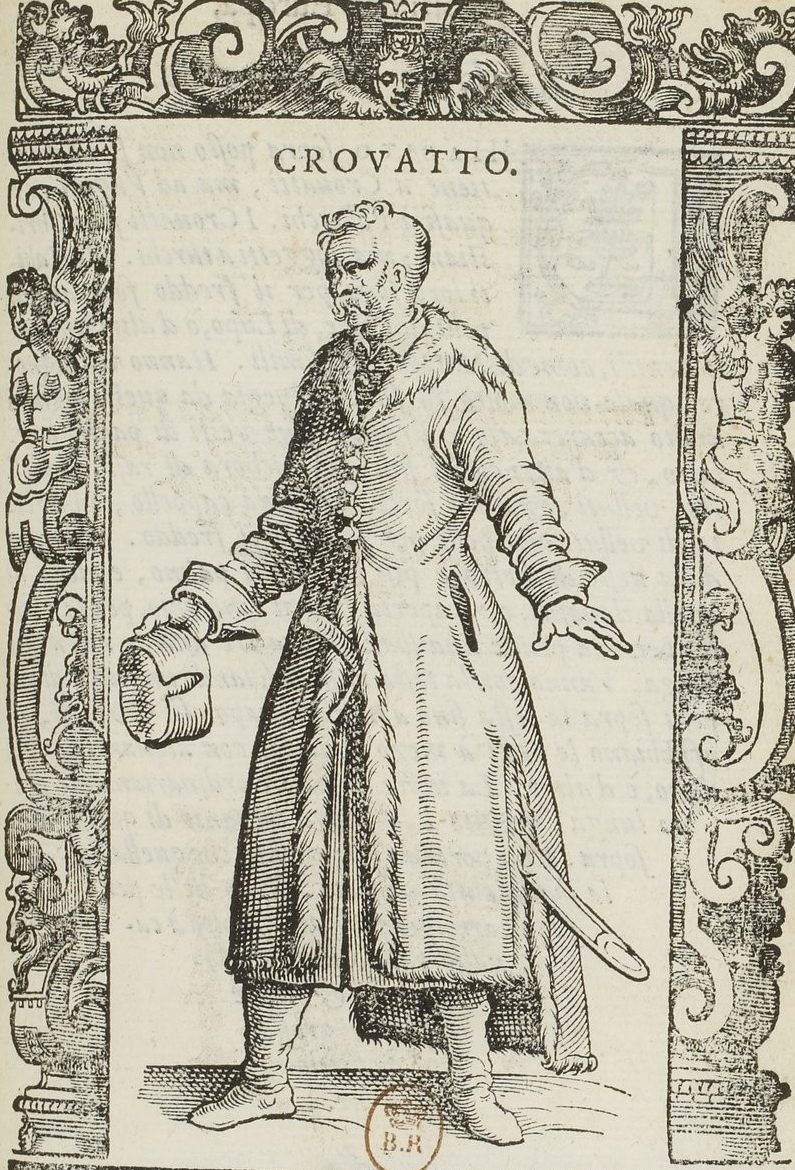
In his article Pokušaj otkrivanja nastanka i razvoja kravate kao riječi i odjevnoga predmeta (An Attempt to Discover the Origin and Development of the Tie as a Word and as a Garment), Vladimir Huzjan states that the noun Cravate was recorded in French in 1651 in a meaning close to the modern one. In the same section, he notes that foreign mercenaries, including Croats, served in the French army in the seventeenth century, and that the French at the time referred to Croats as Cravates, or more often Crabates, while the form Croates became established later, following the Latin form Croatus. Huzjan also refers to Le Petit Robert, which connects the word with Croatian cavalrymen and the fabric worn around the neck. [1][7]
The Military Meaning of the Word
French lexicographical sources confirm that the word cravate could initially refer to a soldier. The French National Centre for Textual and Lexical Resources (CNRTL) records that before 1648, around 1630, cravate had a military meaning: it denoted a soldier of light cavalry, originally of Croatian origin. The same source gives the expression compagnie de cravates, meaning a company or unit of cravates. [2]
This is significant because it shows that the word did not immediately refer only to a garment. In French, the term could first designate people — soldiers or cavalrymen — and only later the item of dress associated with them.
From Soldier to Neckcloth
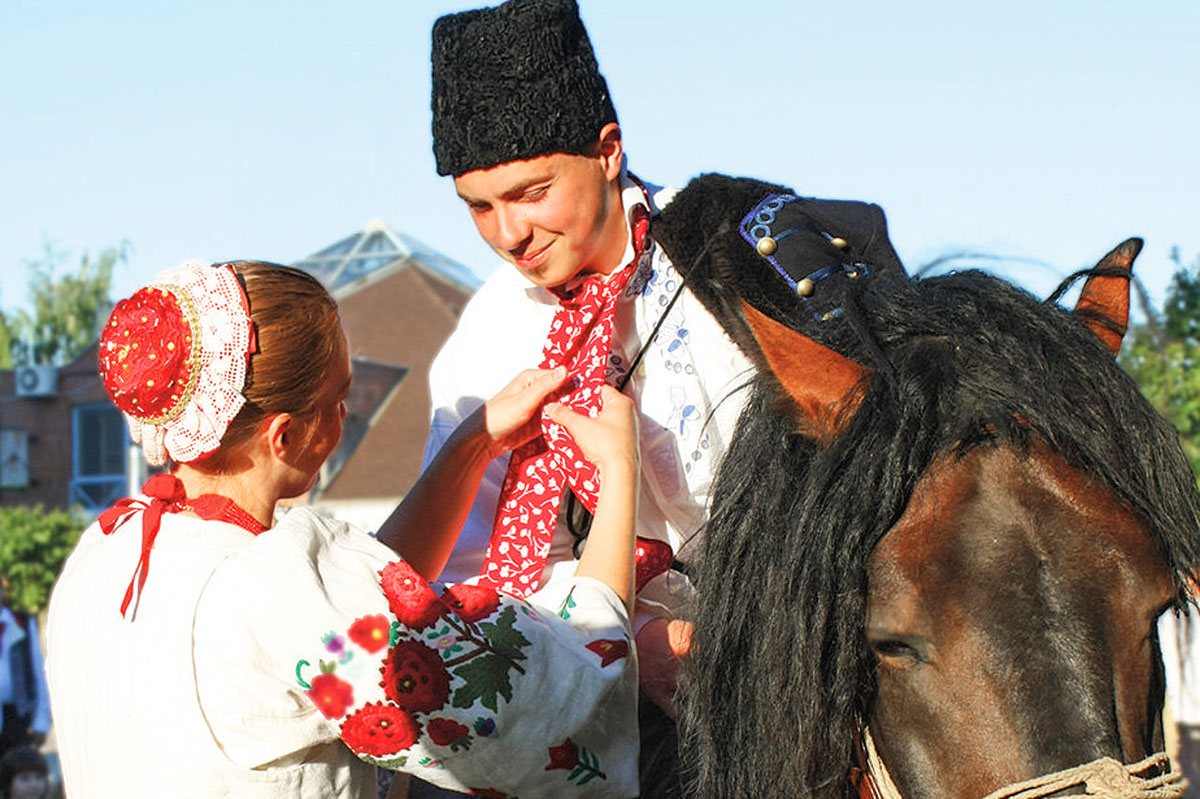
CNRTL places the meaning of cravate as a “band of fabric worn around the neck” in the period 1649–1652. This meaning is explicitly connected with the fabric worn by Croatian cavalrymen. [2]
These sources do not mean that the modern tie, in its present form, already existed in the first half of the seventeenth century. A neckcloth or band of fabric was worn around the neck, while the term cravate and the form of the garment developed gradually. It is therefore useful to distinguish Croatian cavalrymen as the historical context, the French word cravate as linguistic evidence, and the modern tie as a later developed garment.
The 1694 Dictionary of the French Academy
An important historical source for the French word cravate is the first edition of the Dictionnaire de l’Académie française, published in 1694. In this dictionary, cravate as a feminine noun is defined, in translation from the French, as “a kind of handkerchief made of linen or taffeta that surrounds the neck and takes the place of a collar”. The same entry also gives another meaning: Cravate as a masculine noun denotes a horse from Croatia, while in the plural Cravates refers to a certain cavalry militia, company or regiment. [3]
This entry is particularly interesting because it shows that by the end of the seventeenth century several related meanings coexisted in French: a garment worn around the neck, a horse of Croatian origin, and a cavalry unit. The word cravate therefore developed at the intersection of military history, ethnonymy and the history of dress. The ninth edition of the Dictionary of the French Academy retains the same etymological sequence: in the seventeenth century the word denoted both a Croatian soldier and a cravat, and was subsequently associated with the band of fabric worn around the neck by Croatian cavalrymen. [5]
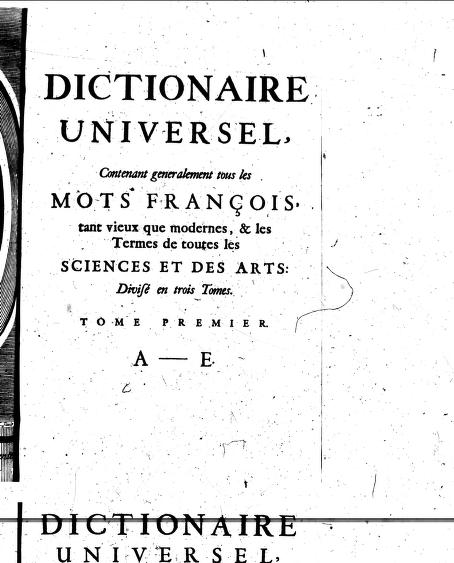
Furetière’s Definition from 1690
An even earlier lexicographical trace appears in Antoine Furetière’s Dictionnaire universel of 1690. In its online lexical material, Le Robert reproduces Furetière’s definition of cravatte as a type of collar worn by men with outdoor dress or a justaucorps, tied around the neck and hanging below the chin. Examples include cravats made of lace, muslin or taffeta. [4]
Furetière’s definition does not directly address the ethnic origin of the word, but it is important because it shows that by the late seventeenth century cravatte was already a recognisable term for an item of dress in French.
Littré: Military and Sartorial Meanings
In the Dictionnaire de la langue française, Émile Littré separates two historically connected meanings. As a masculine noun, cravate denotes a horse from Croatia and a light cavalry soldier. As a feminine noun, it denotes a light piece of fabric worn around the neck. [6]
In the etymological note attached to the sartorial meaning, Littré states that the garment was named after the Cravates or Croates who entered French service. The two entries therefore show clearly how the military, ethnic and sartorial meanings remained connected in later French lexicography. [6]
The Form of the Word and Possible Linguistic Mediation
The etymology of the French word cravate involves several possible paths of linguistic mediation. CNRTL states that the word derives from the form Cravate, an ethnonym meaning “Croat”, and that this form is an adaptation either of the Slavic hrvat or of the German dialectal krawat. The same source records the parallel form croate, borrowed from German Kroate, as well as earlier attestations of Crabate and Cravates. [2]
Französisches Etymologisches Wörterbuch (FEW) confirms the wider geographical and dialectal distribution of the same etymological group. In volume 16, under the etymon kroate, it records the standard and regional forms cravate, crawate, crevata, croate, crovote and crowate. [8]
Huzjan’s interpretation follows a similar line. He connects the French form cravate with an adapted form of the ethnic name Hrvat, while also noting the influence of the German-speaking area in the development of some forms. [1]
French as an Intermediary Language
According to Huzjan, the fashion of wearing cravats spread from France, and the word spread with it. From the French cravate came, or were connected with it, forms in other European languages: Italian cravatta, English cravat and German Krawatt, later Krawatte. According to the same interpretation, the Croatian word kravata re-entered Croatian through the German form. [1]
This linguistic path shows that the word “tie” should not be viewed only as the name of a garment, but also as an example of word transmission between European languages. In this transmission, French has a particularly important role, since the form cravate became established in a fashionable and social context.
Conclusion
The French form cravate is one of the key pieces of evidence in the study of the etymology of the word “tie”. French sources from the seventeenth century show a transition from military and ethnic meanings toward the name of a fabric worn around the neck. Dictionaries confirm that these meanings overlapped for some time: cravate could denote a light cavalry soldier, a cavalry unit, a horse of Croatian origin, and an item of dress.
For further research, a cautious formulation is necessary: the French word cravate is connected in historical and etymological sources with Croatian cavalrymen and with the fabric they wore around the neck, but the development of the word involved several linguistic mediations and a broader European context.
Sources and Literature for the English Version
1. Vladimir Huzjan, “Pokušaj otkrivanja nastanka i razvoja kravate kao riječi i odjevnoga predmeta”, Povijesni prilozi, 34, Zagreb, 2008, pp. 103–121. https://hrcak.srce.hr/file/43829
2. CNRTL / TLFi, entry cravate. https://www.cnrtl.fr/etymologie/cravate//1
3. Dictionnaire de l’Académie française, 1st edition, 1694, entry cravate, vol. 1, p. 281. https://www.dictionnaire-academie.fr/article/A1C0693
4. Antoine Furetière, Dictionnaire universel, 1690, entry cravatte, as reproduced in Le Robert’s digital lexical material. https://dictionnaire.lerobert.com/definition/cravate
5. Dictionnaire de l’Académie française, 9th edition, 2024, entry cravate. https://www.dictionnaire-academie.fr/article/A9C4833
6. Émile Littré, Dictionnaire de la langue française, entries cravate [1] and cravate [2]. https://www.littre.org/definition/cravate and https://www.littre.org/definition/cravate.2
7. Le Petit Robert de la langue française, entry cravate; cited according to Vladimir Huzjan.
8. Walther von Wartburg, Französisches Etymologisches Wörterbuch (FEW), vol. 16, etymon kroate, pp. 395b–396a; ATILF digital index. https://lecteur-few.atilf.fr/