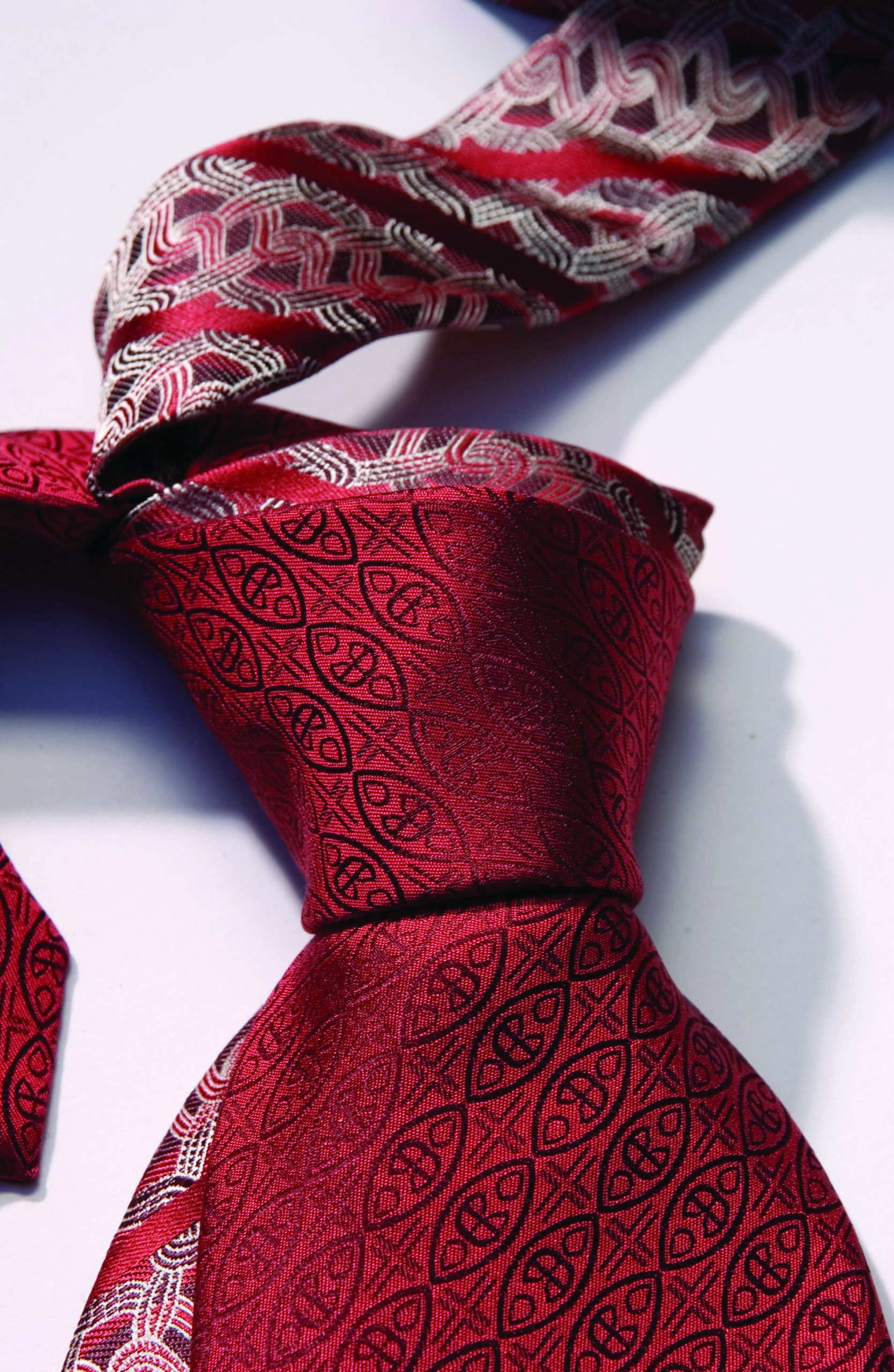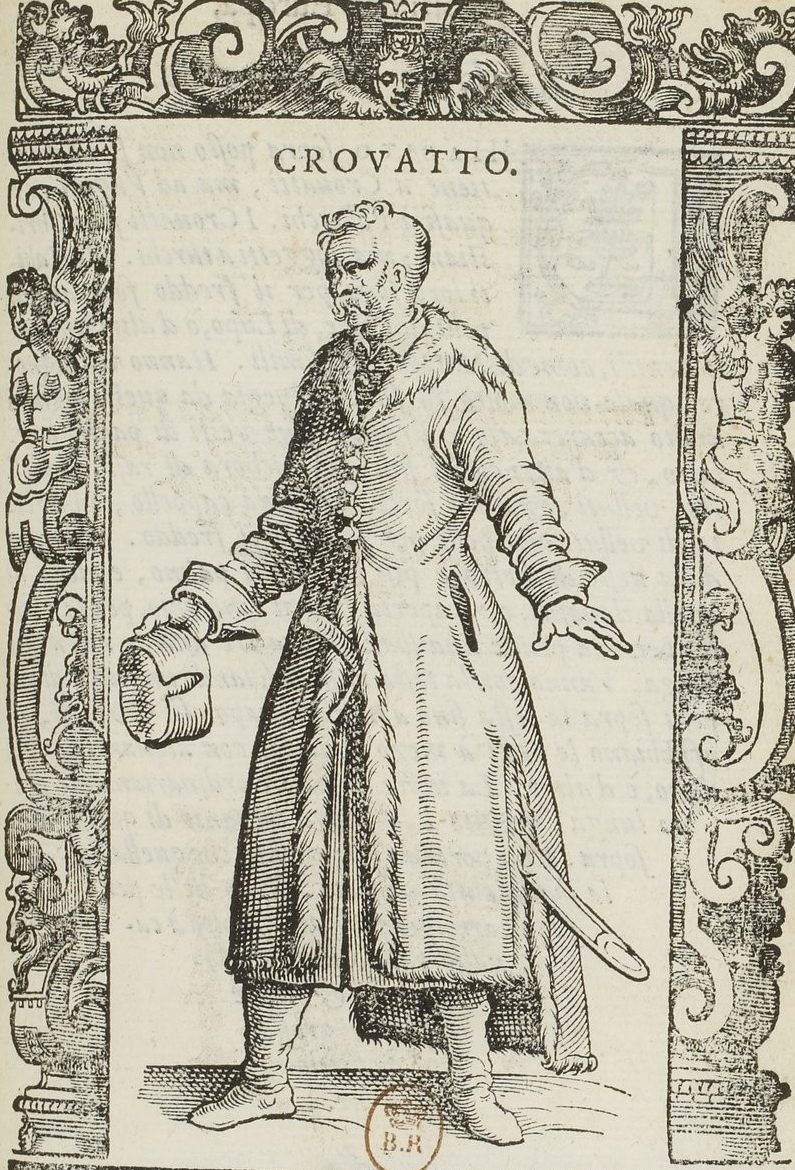
Although a precise answer cannot be given, numerous direct and indirect testimonies point to the deep roots of tying a kerchief around the neck within the historical Croatian lands.
If the term “tie” is understood in its modern, stylised sense, it refers to a specific garment. Yet when viewed in a broader historical perspective—as a kerchief tied in a knot around the neck—its traces extend deep into traditional culture.
In Croatian folk costumes, knotted kerchiefs appear in more than fifty variations, across a geographical range from Slavonia and Baranja, through central Croatia, to Istria and the entire Adriatic coast. They were worn by both men and women, in everyday settings as well as on ceremonial and festive occasions.
The terminology varies: podgutnica, rupček, poša, facol, fazol. Each name reflects a specific linguistic and cultural environment. The word “rubac” itself derives from the Old Slavic root meaning “edge,” referring to a bordered piece of fabric intended for tying and shaping.
The knot was not merely practical. In Slavic traditional culture, it carries symbolic meaning, indicating connection, obligation, and alliance. In wedding customs, knotted textile elements symbolised union and commitment. In certain regions, the manner of tying could signal age, marital status, or social belonging.
Within military and borderland contexts of the Croatian territories, kerchiefs tied around the neck also served protective purposes, shielding against wind and cold, while remaining a recognisable component of visual identity.
The geographical spread of this practice further confirms its rootedness. Knotted kerchiefs are documented among the Burgenland Croats and within Croatian communities in Moldova, Romania, and Molise.
Thus, the question of when people began tying a tie around the neck does not lead to a single date, but to layered cultural continuity. In the Croatian context, tying a kerchief around the neck forms part of a broader sartorial, symbolic, and social tradition.